
Washable, reusable foam filters.
Rinse it, dry it, put it back. An open-cell lattice releases trapped dirt in a way pleated media cannot, which turns a filter from a consumable you stock into a component you service.
Dirt comes back out.
A pleated paper filter traps particles in a dense mat of fibres. That is effective, and it is also permanent — the dirt is mechanically entangled, and rinsing drives it deeper rather than removing it. Which is why paper filters are thrown away.
Reticulated foam captures differently. Particles adhere to the surfaces of an open lattice of strands, distributed through the depth of the material rather than packed into a surface. There is nothing to entangle them, and nothing blocking the route back out — so water flowing the other way through the lattice carries them away. Rinse from the clean side towards the dirty side and the filter genuinely returns close to its original condition.
That single property changes the economics. The element stops being a consumable you have to stock, forecast and dispose of, and becomes a part of the machine that gets serviced alongside everything else.
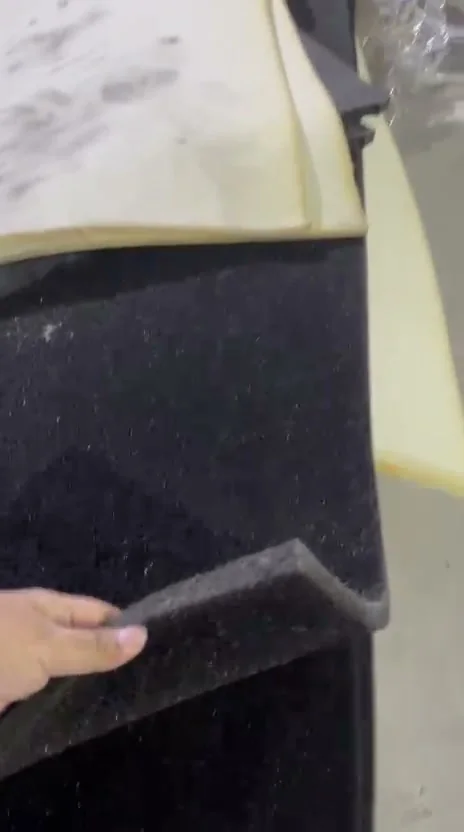
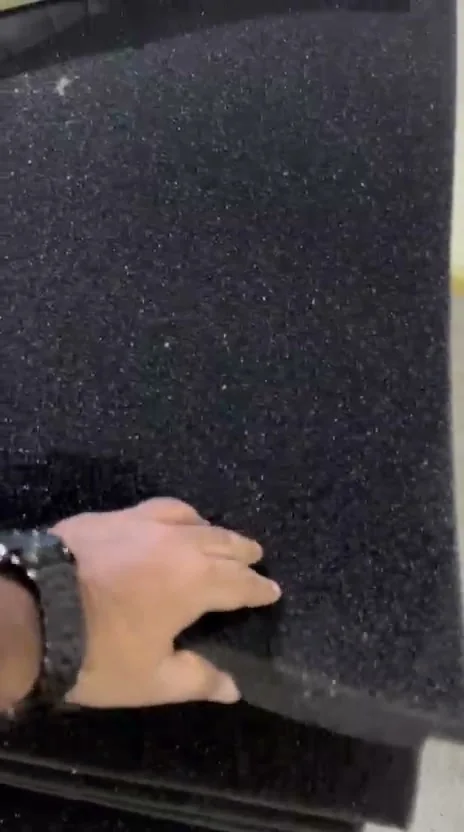
Doing it properly.
Cleaning foam is easy to do and easy to do badly. The method matters more than the products:
- 01 — Tap out the loose dust first. Anything that falls out dry never needs to be washed out wet.
- 02 — Rinse backwards. Water should flow from the clean face towards the dirty face, so dirt exits the way it came in instead of being pushed through the depth.
- 03 — Lukewarm water, mild detergent if oily. Hot water is unnecessary and solvents attack polyurethane. A little dish detergent handles oily machine dust.
- 04 — Squeeze, never wring. Gentle compression pushes water out. Twisting tears strands, and a torn lattice does not recover.
- 05 — Dry completely before refitting. A damp element restricts airflow and can encourage growth. Air-dry it; do not use heat.
Two things to avoid entirely: washing machines, whose agitation destroys the lattice, and pressure washers, which will punch straight through a foam sheet and leave a hole you cannot see until it is in service.
When to replace it.
Foam does not last forever, and the limit is the material rather than the cleaning. Over years, heat, ultraviolet light and some chemicals gradually embrittle polyurethane. The strands lose flexibility, then they start to break.
The test is mechanical and takes five seconds: stretch a corner gently. Healthy foam stretches and returns. Foam at the end of its life crumbles, sheds strands, or has gone stiff and discoloured. At that point it should be replaced, because a shedding filter is putting debris downstream of itself — which is worse than no filter at all.
In normal indoor service, dozens of wash cycles is unremarkable. In hot, sunlit or chemically aggressive environments, expect considerably less and inspect more often.
Is it actually cheaper?
Over a service year, usually yes — and the more frequently the filter loads, the wider the gap. But the media cost is the smaller half of the saving. The larger half is what stops happening: no consumable to hold in stock, no reorder to forget, and no equipment standing idle because the spare filter ran out and the next delivery is Tuesday.
We will also be straight about where washable foam is the wrong answer. If your process requires a certified filtration grade verified at every filter change, foam does not make that claim and should sit in front of a rated stage as a pre-filter rather than replacing it. And if the contamination is oily enough that cleaning is a genuinely unpleasant job, the labour can outweigh the media saving.
- Good fit — dusty industrial intakes, HVAC pre-filter stages, compressor and cabinet guards, equipment on a maintenance schedule.
- Poor fit — certified filtration duties, sub-micron capture, and anywhere nobody will ever actually do the washing.
Matching what you already have.
The most common way this is ordered is as a washable replacement for a disposable element somebody is tired of buying. Send the existing filter — clogged, torn or otherwise past it is fine — and we match its profile, thickness and an appropriate pore grade, then die-cut replacements to fit the same housing. The tooling is kept, so repeat orders are straightforward.
Common questions.
How do I clean a reticulated foam filter?
Tap out the loose dust first, then rinse from the clean side towards the dirty side so the dirt leaves the way it came in rather than being driven deeper. Lukewarm water and a mild detergent are enough for oily dust. Squeeze gently rather than wringing or twisting, which tears strands, and let it dry completely before refitting — a damp element restricts airflow and can encourage growth.
How many times can a foam filter be washed?
Many times, though not indefinitely. Life is limited by the strands themselves rather than by cleaning: over years, heat, UV and some chemicals gradually embrittle the polyurethane. The practical test is mechanical — stretch a corner gently, and if strands crumble or the sheet has gone stiff and yellow, replace it. In normal indoor service, dozens of cycles is unremarkable.
Is a washable foam filter actually cheaper than disposable media?
Over a service year, usually yes, and the more often the filter loads the bigger the gap. The saving is not only the media — it is not holding stock of a consumable, and not shutting equipment down because the spare filter ran out. Where disposable still wins is applications requiring a certified filtration grade on every change, which foam does not claim.
Can foam filters be washed in a machine or with a pressure washer?
No to both. A washing machine's agitation tears the lattice, and a pressure washer will blast straight through a foam sheet and leave a hole. Rinsing under a tap or a hose at normal pressure is all that is needed — the open structure releases dirt easily, which is the whole point of the material.
Can you make a washable replacement for a filter I already have?
Yes, and it is the most common way this is ordered. Send the existing element — even a clogged or damaged one — and we match its profile, thickness and pore grade, then die-cut replacements to fit the same housing. You keep the tooling for repeat orders.
Keep reading.
Ready to bring
your idea to life?
Whether you're an entrepreneur with a sketch or an established company scaling production, we'll treat your project like it's the only one on the floor.
Let's talk.
Prefer a quick chat? Call us directly, ping us on WhatsApp, or drop an email. We reply within a few hours during business hours.