Fifty to five hundred, without tooling.
The quantity nobody wants: too many to hand-make, too few to justify a mould. Printed end-use parts, bridge production while a tool is cut, and an honest answer about when you should stop printing.
The quantity nobody wants.
There is a gap in Indian manufacturing between a prototype shop and a production manufacturer, and a great many products die in it. Ten units, anyone will make. Ten thousand, everyone wants. Two hundred is the number where the prototype shop says it is too many and the moulder says the tooling cost cannot be justified — and the product waits.
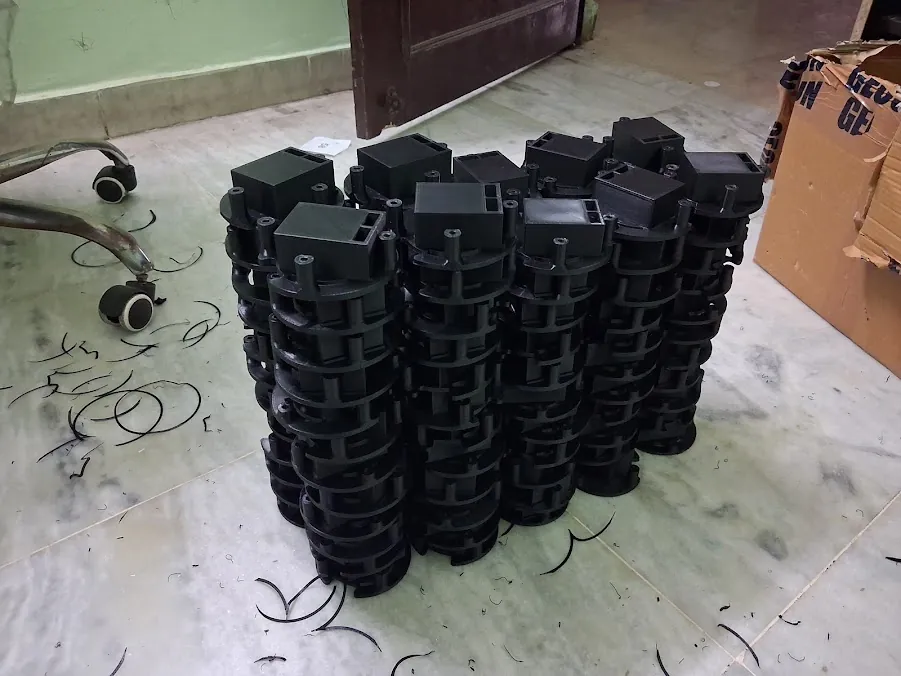
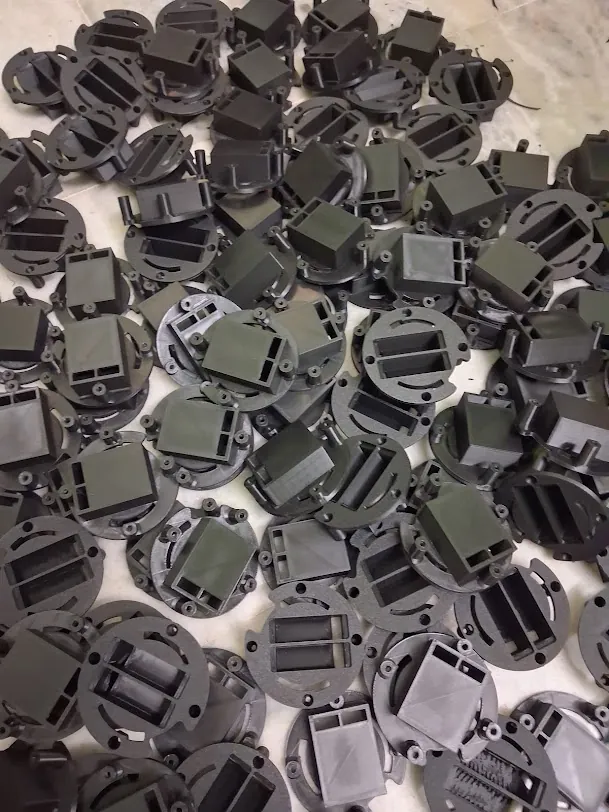
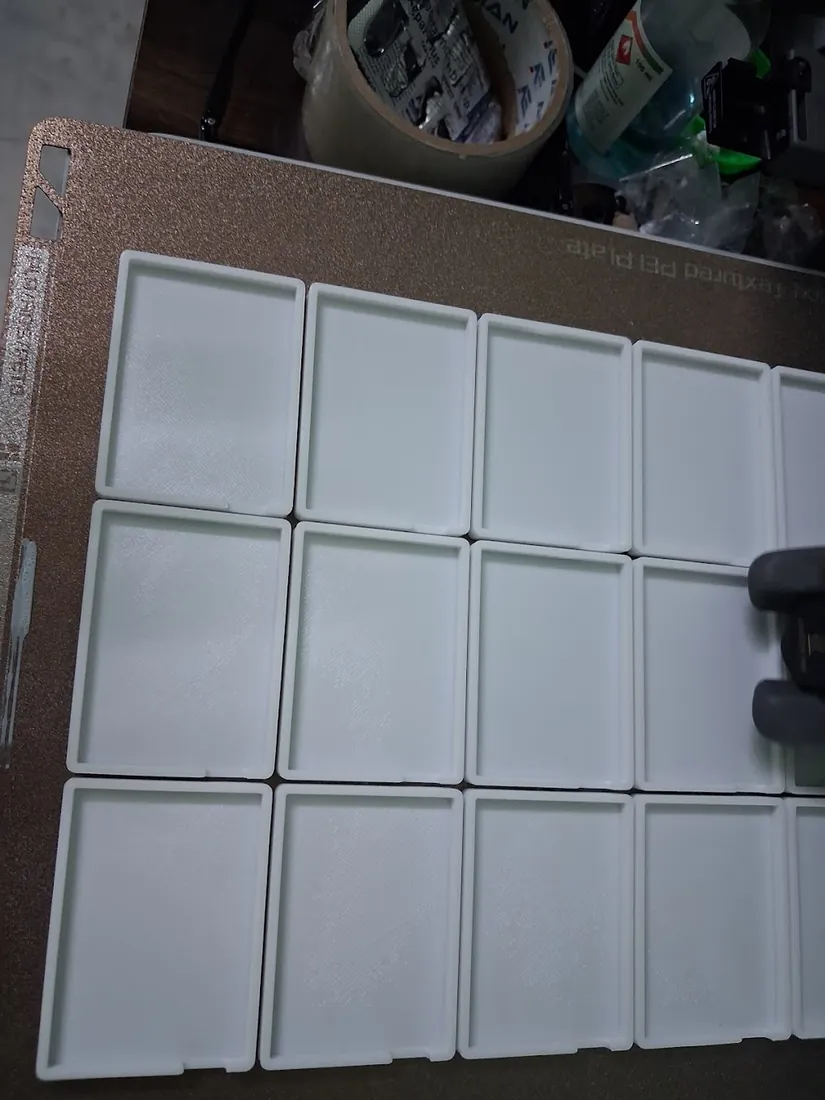
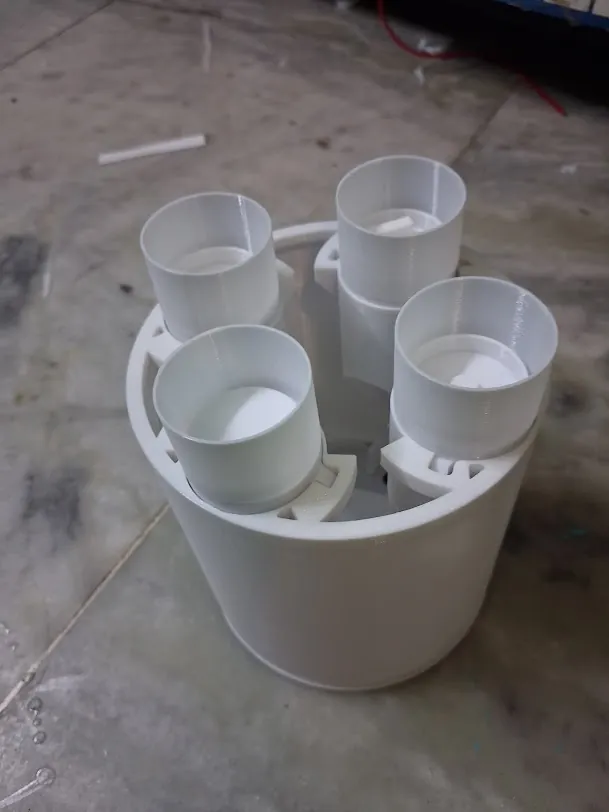
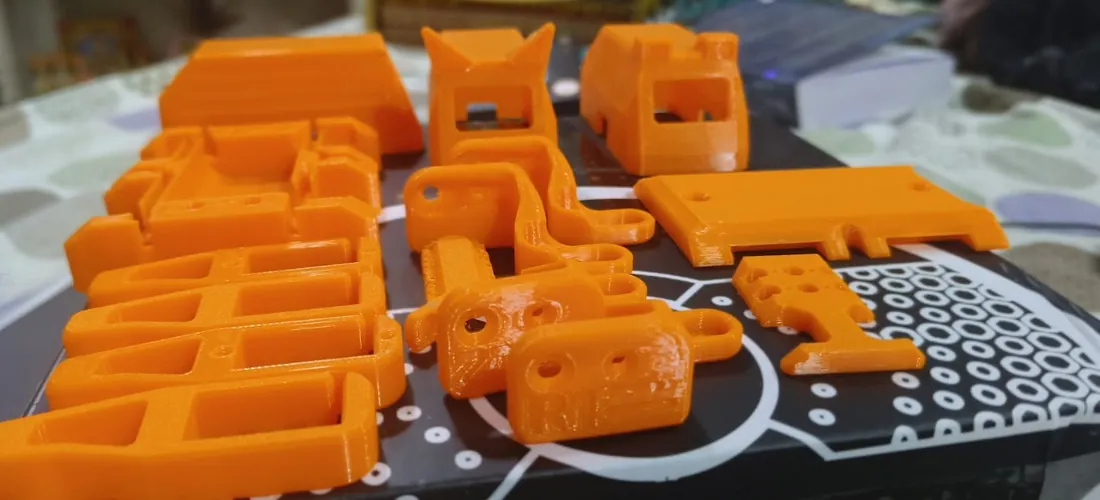
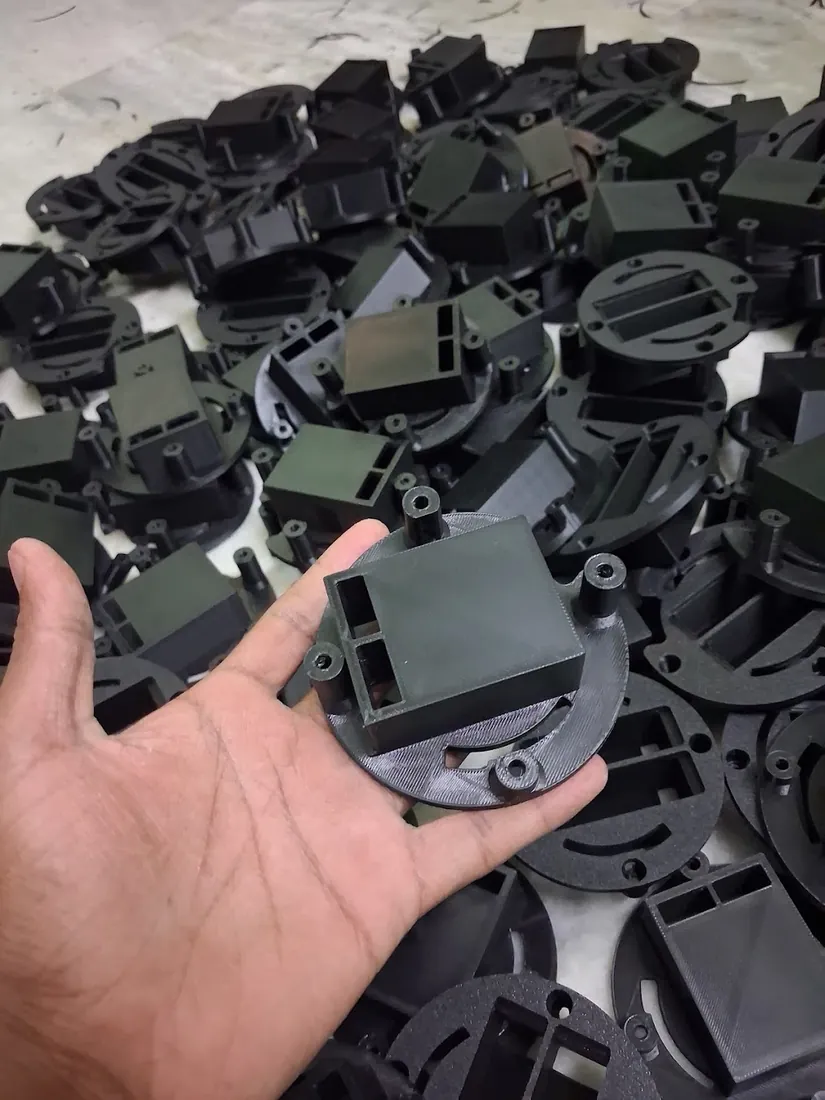
That range is exactly where printing earns its place as a production process rather than a prototyping one. There is no tooling to pay for, so two hundred parts costs roughly two hundred times one part — which is bad news at ten thousand units and very good news at two hundred. And because there is no tool, the design can still change between batches.
When moulding wins.
There is no universal crossover quantity, and any supplier who quotes one is guessing. The economics depend on part size far more than on part count, because printing scales with machine time — which scales with volume of material — while moulding front-loads a tooling cost and then produces parts almost free.
| Situation | Usually | Why |
|---|---|---|
| Small part, high volume | Mould it | Tooling is amortised quickly and cycle times are seconds. Printing cannot compete. |
| Large part, moderate volume | Print it | Tooling for a large part is expensive and slow, and print time is a smaller share of the total cost. |
| Design still moving | Print it | A tool change costs weeks and real money. Freezing a design too early is the more expensive mistake. |
| Complex geometry | Print it | Undercuts and internal features need side actions in a tool. They are free in a print. |
| Finish or material is critical | Mould it | Certified material properties and a cosmetic surface are things printing does not give you. |
Send the part and the annual quantity and we will run the comparison properly — including the case where the answer is that you should not print, which happens often enough that saying so is part of the service. We do both processes, so the advice is not steering you toward the only machine we own.
Shipping while the tool is cut.
Bridge production is printing the parts you need while the injection tool for them is still being made. Tooling takes weeks; a launch date does not move. So printed parts — same design, same fit, shipped to real customers — cover the gap, and stop when the mould comes online.
It removes a choice nobody should have to make: launch late, or commit to tooling before the design has met a customer. Teams routinely ship the first two hundred units printed, learn three things that are wrong, and get those changes into the tool before it is finished — which is the cheapest time by an enormous margin.
Because we do the moulding too, the transition is one team's problem rather than a handoff. The design-for-manufacture review happens while bridge parts are running, not after.
Making two hundred the same.
Production is a different discipline from prototyping, and most of it is process rather than machinery: one material lot for the run, one print profile, one orientation, and inspection spread across the run rather than concentrated on the first part off the bed.
- Material lot control — the whole run from one lot where quantity allows, so colour and behaviour do not shift mid-batch.
- Fixed profile — settings frozen for the run. A "small improvement" halfway through is how a batch becomes two batches.
- Sampled inspection — measured across the run against the dimensions you nominate as critical.
- Records on request — inspection data supplied with the consignment if your process needs it. Ask at scoping, not after delivery.
Tell us which dimensions actually matter. A part with three critical features and forty cosmetic ones is straightforward; a part where everything is nominally critical is a conversation we should have before you order.
Common questions.
At what quantity does 3D printing stop making sense?
There is no single number, because it depends on part size more than part count. Machine time scales linearly with printing, while moulding front-loads a tooling cost and then makes parts almost free. For a small part, moulding often wins by a few hundred units; for a large one, printing can stay competitive into the thousands. Send the part and the annual quantity and we will run the comparison honestly, including the case where you should not print.
What is bridge production?
Printing the parts you need while the injection tool for them is still being cut. Tooling takes weeks and a product launch does not wait, so printed parts cover the gap — same design, same fit, shipped to real customers — and stop when the mould comes online. It removes the choice between launching late and committing to tooling before the design is settled.
Are printed parts good enough to sell to end customers?
For many products, yes, and it is normal practice now. PETG printed with proper wall counts and correct orientation is a durable end-use material. What you should not do is ship printed parts where the application needs certified material properties, sustained high temperature, or a cosmetic finish that only moulding gives — and we will tell you which category your part falls into.
Can you handle the transition from printing to moulding?
That is the point of using us rather than a print service. The same team reviews the design for manufacture, advises on the tooling decision, and takes it into moulded production and PCB enclosures in-house. Most projects lose their timeline at the handoff between a prototyping vendor and a manufacturer, because neither owns the problem.
Is every part in a run identical?
Within normal FDM variation, yes, and consistency is mostly a process question rather than a machine one: same material lot, same profile, same orientation, parts inspected across the run rather than only at the start. For runs where dimensional consistency is critical, tell us which dimension matters and we will inspect against it and report.
Keep reading.
Ready to bring
your idea to life?
Whether you're an entrepreneur with a sketch or an established company scaling production, we'll treat your project like it's the only one on the floor.
Let's talk.
Prefer a quick chat? Call us directly, ping us on WhatsApp, or drop an email. We reply within a few hours during business hours.