
Die-cut to your drawing.
Rings, discs, strips, gaskets and profiles that follow a housing — cut to your dimensions rather than trimmed from a standard sheet. Send a drawing, a DXF, or the part you want matched.
A sheet is not a filter.
Almost nothing uses foam as a rectangle. Filters sit inside housings with lips, posts and fixing points; gaskets follow a flange with bolt holes; speaker foam is a disc, often with a centre cut out. The difference between a sheet of material and a component is the cutting, and it is the step that decides whether the part drops into place or has to be persuaded with a knife on the assembly bench.
Foam is unusually well suited to die-cutting. It compresses under the blade rather than tearing, so cuts come out clean and internal features hold their shape — tight radii, slots, holes, irregular outlines that follow a casting. Fibrous media fray at exactly these features; foam does not.
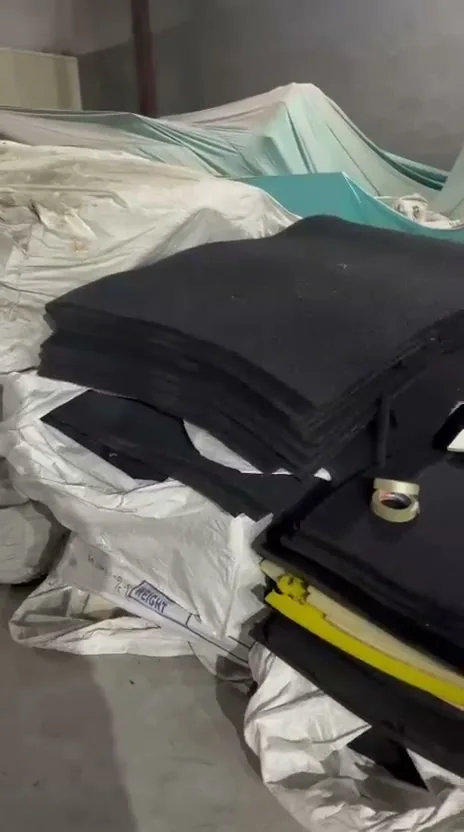
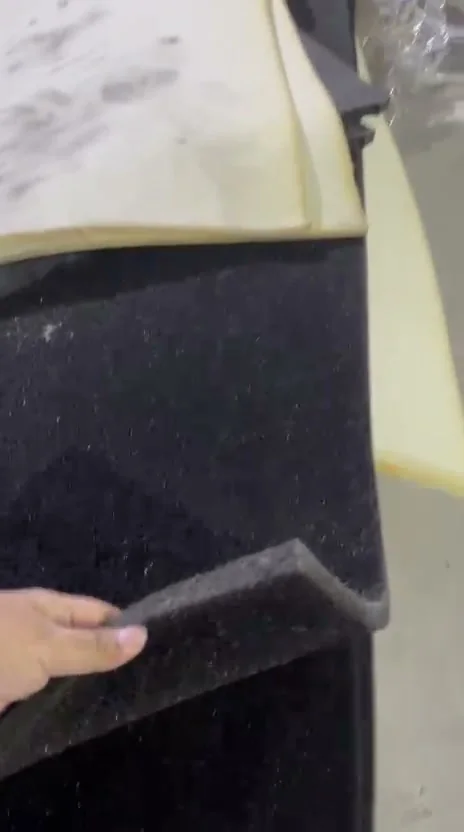
Profiles we supply.
- Discs and rings — with or without a centre cut-out, for speaker grilles, round housings and pipe intakes.
- Rectangles and panels — to an air handling unit's frame dimensions, with corner reliefs where the housing needs them.
- Strips and tapes — sealing runs, edge cushioning and damping, cut to width and length.
- Gasket outlines — following a flange, with bolt holes and internal apertures cut in the same operation. See foam gaskets.
- Irregular profiles — shapes that follow a moulding or a casting, cut to a drawing rather than approximated.
- Multi-layer parts — a coarse grade bonded to a fine one for staged filtration, cut as one component.
Three ways to specify.
In ascending order of how much it removes from the process, any one of these is enough to start:
- 01 — A dimensioned sketch. Outline, thickness, and which dimensions actually matter. Hand-drawn is fine if it is dimensioned.
- 02 — A DXF or PDF. Better, because the profile is unambiguous and nothing is lost in transcription.
- 03 — The physical part. Best. It settles profile, thickness and pore grade in one go, and removes an entire round of revisions.
Alongside the profile we need the pore grade — see choosing a PPI — and the thickness, from 5 mm upwards. If you are unsure of the grade, describe the application instead and we will recommend one.
What it costs, honestly.
Most custom profiles need a cutting tool, which is a one-time cost. Once it exists, repeat orders run against it with no further tooling charge — so the second order of a part is materially cheaper than the first. Simple rectangles and strips generally need no tooling at all. We separate tooling from the per-part price in the quote so you can see which is which and decide accordingly.
On tolerance, be realistic with us and we will be realistic with you. Foam is compressible, so a die-cut foam part does not hold dimensions the way a machined part does, and a soft 20 PPI sheet moves more under the blade than a firm 60 PPI one. For the overwhelming majority of filter and gasket applications this is irrelevant, because the part is compressed on assembly anyway. Where a dimension genuinely is critical, tell us which one and we will tell you what we can hold rather than quoting a number that sounds reassuring.
Common questions.
What shapes can you die-cut?
Rings, discs, rectangles, strips, oval and racetrack profiles, gasket outlines with internal cut-outs, and irregular shapes that follow a housing. Foam cuts cleanly because it compresses under the blade rather than tearing, so internal features and tight radii come out sharp in a way they would not in a fibrous medium.
What do you need from me to cut a custom profile?
Any one of three things, in ascending order of usefulness: a dimensioned sketch with thickness and tolerance, a DXF or PDF of the outline, or the physical part you want matched. The sample is best because it settles thickness, profile and grade in one go and removes a round of revisions.
Is there a tooling charge for a custom shape?
For most profiles the cutting tool is a one-time cost, and once it exists repeat orders run against it with no further charge. Simple rectangles and strips usually need no tooling at all. We will separate the tooling cost from the per-part price in the quote so you can see which is which.
What tolerance can you hold on a die-cut foam part?
Foam is a compressible material, so tolerances are looser than for a machined part and depend on the grade and thickness — a soft 20 PPI sheet moves more under the blade than a firm 60 PPI one. For most filter and gasket applications this is irrelevant, because the part is compressed on assembly anyway. If a dimension is genuinely critical, tell us which one and we will tell you honestly what we can hold.
Can you cut foam we supply, or only your own material?
Normally we supply the foam, because the grade and the cut are easier to get right together and we can stand behind the result. Converting customer-supplied material is possible for larger runs — send the details and we will tell you whether it makes sense.
Keep reading.
Ready to bring
your idea to life?
Whether you're an entrepreneur with a sketch or an established company scaling production, we'll treat your project like it's the only one on the floor.
Let's talk.
Prefer a quick chat? Call us directly, ping us on WhatsApp, or drop an email. We reply within a few hours during business hours.