
Choosing a foam PPI.
Pores per linear inch is the single most consequential number on a foam order, and the one most often specified by habit rather than by reasoning. Here is what each grade from 20 to 80 PPI actually does, and how to pick between them.
What PPI measures.
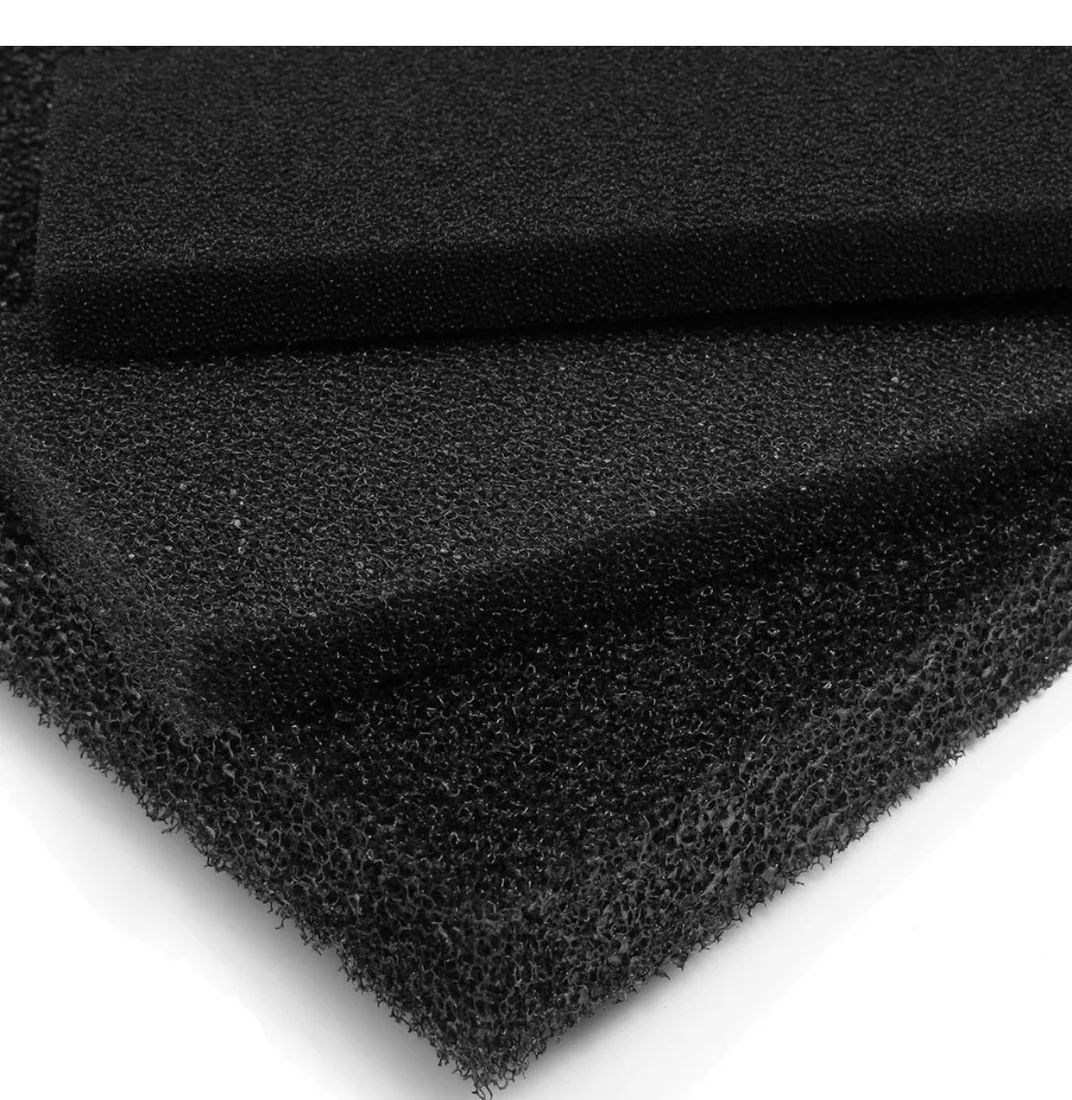
PPI stands for pores per linear inch: how many cells you would cross walking a ruler one inch across the material. A 20 PPI foam has roughly twenty large cells in that inch; an 80 PPI foam has roughly eighty small ones. It is a measure of how fine the lattice is, and that is all it is.
That last point matters more than it sounds. PPI is not a filtration efficiency rating, and it is not a density. It says nothing about how firm the foam feels, how much it weighs, or what percentage of particles it captures — which is why two sheets both labelled 45 PPI can behave quite differently if one is a light, soft grade and the other is dense and firm. If a supplier quotes only PPI, they have told you one of the three things you need.
Cell size is set during foaming, by the catalysts and surfactants that control how many bubbles nucleate and how far they grow before the polymer gels. It is not adjusted afterwards. A 20 PPI foam and an 80 PPI foam are different formulations rather than different processing of the same block — see how reticulated foam is made for where in the process this is decided.
Airflow against capture.
Every filtration decision is the same trade in different clothing. Finer pores intercept smaller particles, but they also present more obstruction, so pressure drop rises and the filter loads up sooner. Coarser pores flow almost freely and hold a remarkable amount of dirt before they restrict anything, but fine dust passes straight through.
The instinct is to specify fine and be safe. It is usually the wrong instinct. A filter that is finer than the application needs will restrict the airflow it was installed to protect, and will need servicing three times as often to do it. The better rule is the opposite: specify the coarsest grade that still catches what you actually need to catch, and let it run longer between washes.
- What are you protecting? A compressor tolerates fine dust far less happily than a cabinet fan does.
- What is in the air? Construction grit, textile lint and fine machining dust are three different problems.
- How often will it be serviced? A filter nobody will touch for six months should be coarse and thick.
- Is there a stage behind it? If so, this one's job is bulk capture, not fine capture.
What each grade is for.
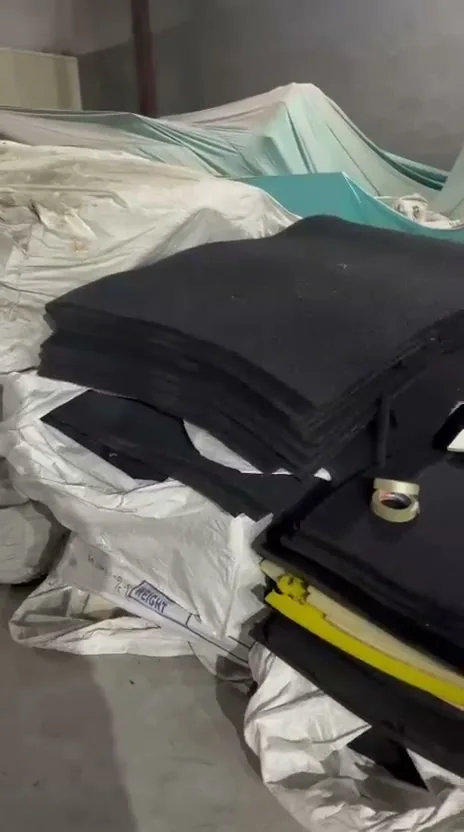
We supply anything from 20 to 80 PPI. In practice most orders land in one of five places, and the differences between them are large enough to matter.
| Grade | Character | Best suited to | Watch out for |
|---|---|---|---|
| 20 PPI | Very open and coarse. Almost no measurable restriction; enormous dirt-holding capacity. | First-stage pre-filters, intake guards, debris and insect screens, heavily dust-laden air. | Fine dust passes straight through. Not a filter on its own if fine capture matters. |
| 30 PPI | Coarse but visibly filtering. The most widely used pre-filter grade. | HVAC pre-filters, compressor and blower guards, evaporative cooler pads, speaker grilles. | Often specified when 20 PPI would last longer and 45 would capture better — check which you need. |
| 45 PPI | The middle ground: useful capture at a pressure drop most fans tolerate comfortably. | General HVAC intake, equipment and cabinet filtration, acoustic grilles, single-stage duty. | The default choice by habit. Worth confirming rather than assuming. |
| 60 PPI | Fine lattice. Noticeably better on small particles, noticeably more restrictive. | Sensitive equipment, cleaner environments, final stage behind a coarse pre-filter. | Clogs considerably faster if the incoming air is dirty. Wants a coarse stage in front. |
| 80 PPI | Finest grade we supply. High capture, high pressure drop. | Fine dust capture, final-stage filtration, applications where airflow is not the constraint. | Will starve an under-powered fan. Almost always needs staging in front of it. |
Two grades beat one.
For genuinely dusty environments the best answer is usually not a finer filter but two filters. A coarse layer — 20 or 30 PPI — faces the incoming air and takes the bulk of the load, and a finer layer behind it does the capture the coarse layer cannot.
The reason it works is how foam loads. A single fine sheet does most of its capturing in the first few millimetres, so its face blinds over while the rest of the depth is still clean. Put a coarse layer in front and the dirt distributes through a much greater volume of material before restriction becomes noticeable — which in practice means several times the service interval for a very small increase in initial pressure drop.
Both layers can be die-cut to the same profile and supplied together, bonded or loose as you prefer. See die-cutting to your drawing for how the profile is specified, and HVAC intake foam for the air-handling case specifically.
Send the application.
The fastest route to the right grade is not a catalogue, it is a description. Tell us what the equipment is, what it is drawing in, how much airflow it needs and how often anyone will realistically service the filter, and we will recommend a grade and a thickness — and say so if the honest answer is that foam is the wrong medium for your application.
If you are replacing an existing element, send it. Counting cells across a measured inch identifies the grade, and having the physical part settles thickness and profile at the same time.
Common questions.
What does PPI mean in foam?
PPI stands for pores per linear inch: how many cells you would cross along one inch of the material. A 20 PPI foam has around twenty large cells per inch, an 80 PPI foam has around eighty small ones. It describes how fine the lattice is, and nothing else — it is not a measure of density, hardness or filtration efficiency, which is why two foams at the same PPI can feel entirely different.
Is higher PPI better?
No, and this is the most common misunderstanding. Higher PPI captures finer particles, but it also restricts airflow more and clogs sooner, so a filter that is too fine can starve the equipment it was meant to protect and need servicing three times as often. The right grade is the coarsest one that catches what you actually need to catch.
Which PPI should I use for an HVAC intake?
Most air-handling intakes land between 30 and 45 PPI, which balances useful capture against keeping the fan's pressure drop sensible. If the foam is a pre-filter guarding a finer downstream stage, go coarser — 20 to 30 PPI — so it takes the bulk load and protects the expensive element behind it.
What is the difference between PPI and density?
PPI describes cell size; density describes how much polymer is in a given volume. They are independent. A low-density 60 PPI foam is fine-celled but soft and light, while a high-density 30 PPI foam is coarse-celled but firm and heavy. For filtration you specify PPI first, then density if the part also has to hold a shape or seal under compression.
Can I mix two PPI grades in one filter?
Yes, and for dusty environments it is often the better design — a coarse layer facing the incoming air to take the bulk of the dirt, bonded to a finer layer behind it for capture. It lasts considerably longer between services than a single fine layer, which loads up on its face and chokes.
How do I work out which grade my existing filter is?
Send us the old element, or a photograph next to a ruler with good light on the surface. Counting cells across a measured inch gets close enough to identify the grade, and having the physical part also tells us the thickness and profile at the same time.
Keep reading.
Ready to bring
your idea to life?
Whether you're an entrepreneur with a sketch or an established company scaling production, we'll treat your project like it's the only one on the floor.
Let's talk.
Prefer a quick chat? Call us directly, ping us on WhatsApp, or drop an email. We reply within a few hours during business hours.