
Reticulated foam filters, die-cut to spec.
Open-cell reticulated polyurethane foam, cut to your drawing. 20 to 80 PPI pore size, 5 mm thickness upwards, die-cut to profile — supplied for HVAC intakes, speaker grilles and industrial filtration across India.
What reticulated actually means.
Ordinary polyurethane foam is a mass of closed bubbles. Reticulation is a secondary process that removes the membranes between those bubbles, leaving only the skeleton of strands that held them apart. What remains is a fully open three-dimensional lattice — a solid you can see through, with a very high proportion of void space.
That structure is why reticulated foam works as a filter rather than a barrier. Air passes through the open network with very little pressure drop, while particles are trapped across the depth of the material instead of piling up on a surface. A pleated paper filter loads up and chokes; reticulated foam keeps breathing far longer, and can usually be washed and reused.
- Low pressure drop — airflow is preserved, so fans and compressors are not fighting the filter.
- Depth loading — dirt is captured throughout the thickness, not just on the face.
- Washable — rinse, dry and refit, rather than replacing on every service.
- Cuts cleanly — die-cuts into gaskets, rings, discs and complex profiles without fraying.
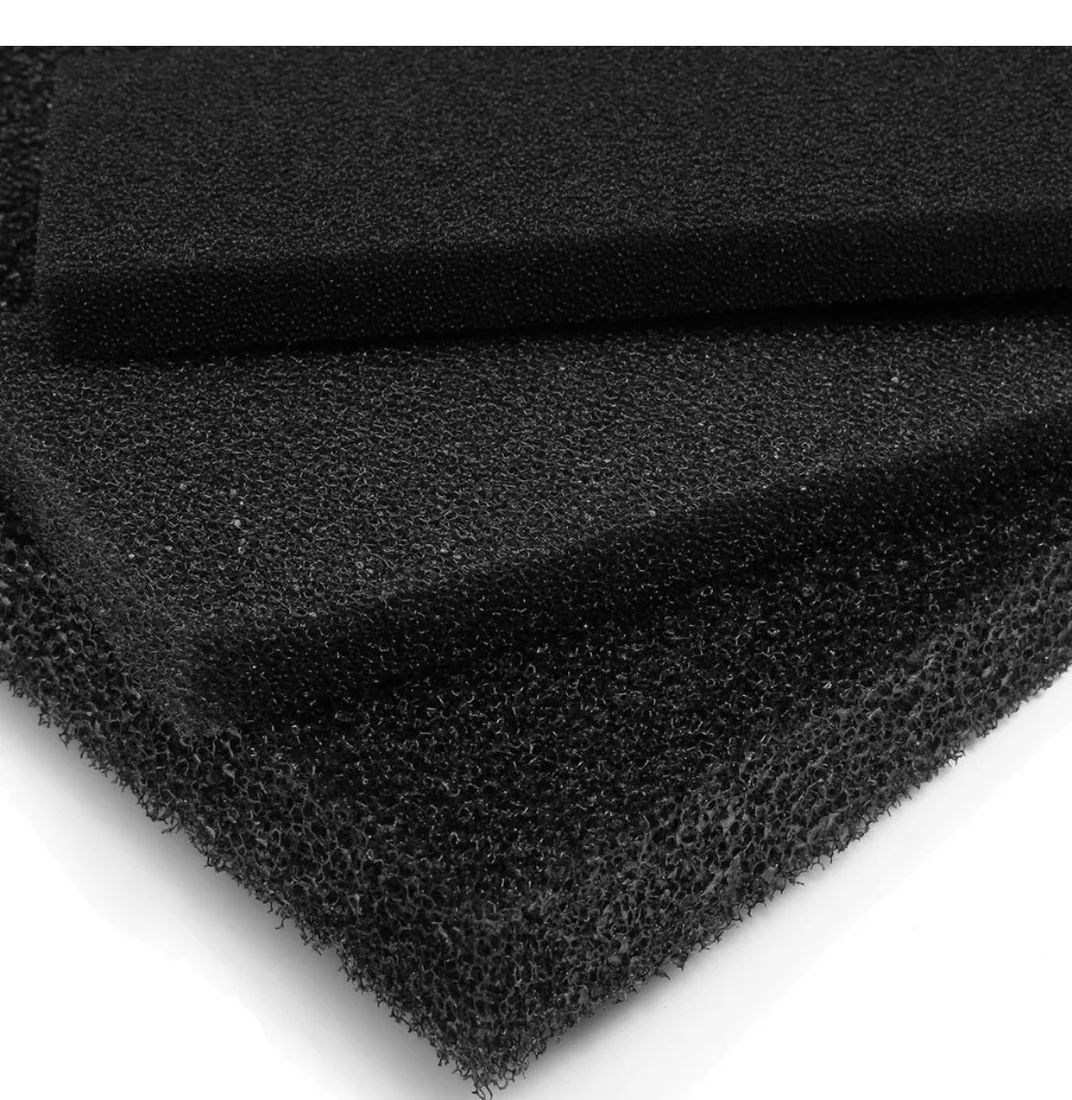
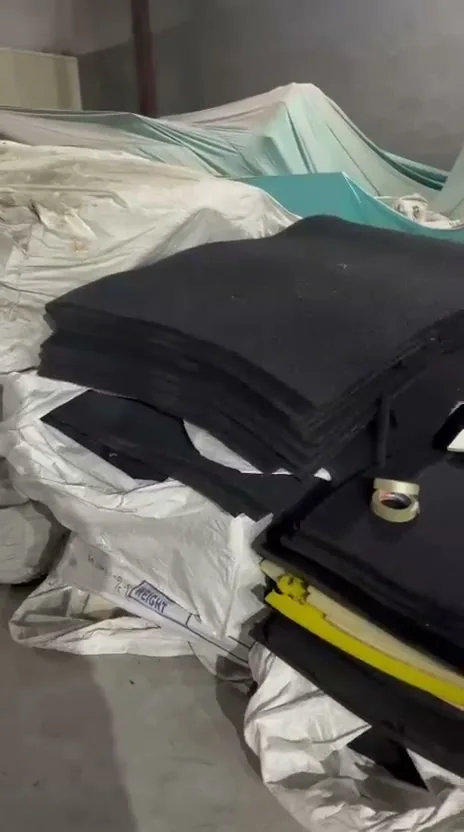
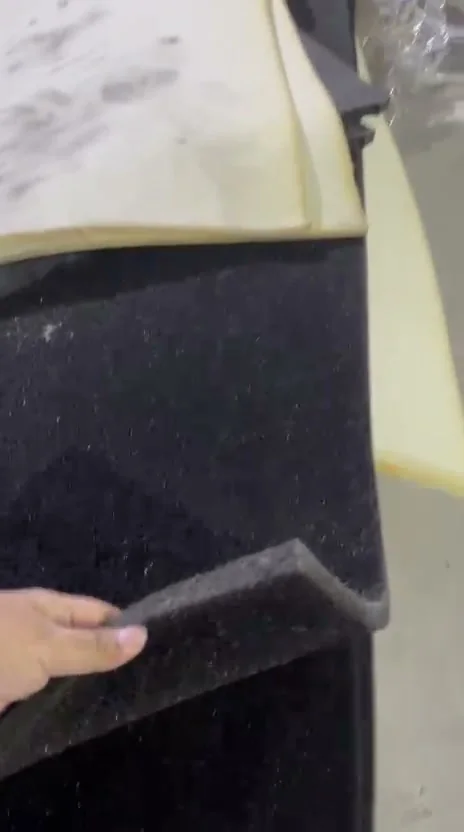
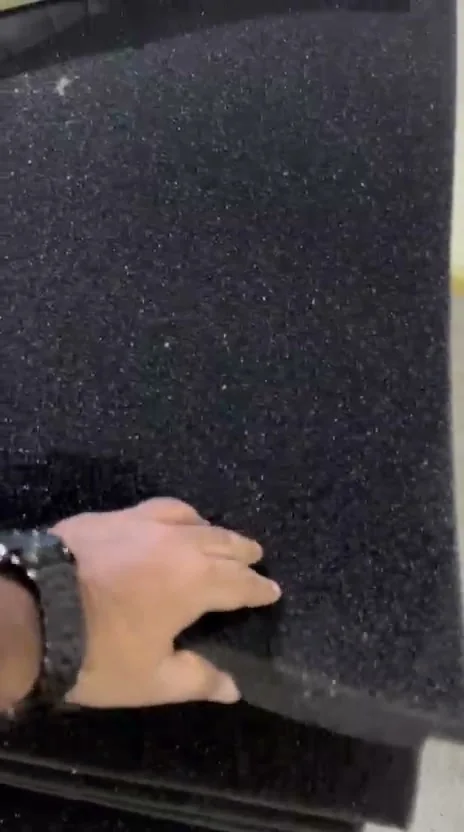
From two liquids to a sheet.
Reticulated foam starts as two liquid chemical streams — a polyol and an isocyanate — metered together and mixed. The reaction generates gas as it cures, so the mixture rises on a conveyor into a continuous block several feet tall, called a bun. Cell size, and therefore the PPI rating, is decided here by the chemistry rather than adjusted later.
Once cured, the block is reticulated: the thin membranes spanning the gaps between strands are removed, either thermally by a controlled flame front in a sealed vessel, or chemically in a caustic bath. What remains is an open three-dimensional lattice of strands with almost nothing in between — which is why air passes through with so little resistance. The block is then sliced into sheets and die-cut to profile.
The full process, step by step — foaming chemistry, bun cure, zapping against quenching, and slicing.
Choosing a PPI.
PPI means pores per linear inch, and it is the single most important number on the order. It describes how fine the lattice is: a low PPI foam has large open cells, a high PPI foam has many small ones. Density is a separate property — two foams can share a PPI and feel completely different in the hand.
The trade-off is straightforward. Finer pores catch smaller particles but restrict airflow more and clog sooner. Coarser pores flow freely and hold a lot of dirt before they load up, but let finer dust through. The right answer depends on what you are protecting and how often the filter will be serviced.
| Pore range | Character | Typical use |
|---|---|---|
| 20 – 30 PPI | Coarse and very open; minimal restriction, high dirt capacity | Pre-filters, intake guards, coarse dust and debris |
| 40 – 60 PPI | Mid-range balance of capture and airflow | HVAC intake, general equipment filtration, acoustic grilles |
| 70 – 80 PPI | Fine lattice; better capture, higher pressure drop | Finer dust, sensitive equipment, final-stage filtration |
If you are unsure, send the application rather than a PPI number — what the equipment is, what it is drawing in, and how often it gets serviced. That usually points to the right specification faster than a catalogue does.
Grade by grade: 20, 30, 45, 60 and 80 PPI compared, and how to stage two grades together.
Where it ends up.
- HVAC and air handling — intake and pre-filter stages where airflow must be preserved and the element is washed on a service schedule rather than replaced.
- Speaker grilles and acoustics — the open lattice is effectively transparent to sound while hiding the driver and keeping dust out of the cone.
- Industrial filtration — guarding compressors, blowers, cabinets and electronics enclosures from particulate ingress.
- Gaskets and damping — die-cut into strips and rings for sealing, cushioning and vibration isolation inside assemblies.
- Fluid and coarse separation — the open structure passes liquid readily while catching larger contaminants.
Foam is frequently ordered alongside printed enclosures when a product needs both a housing and a filtration element — the same team can supply both to one drawing set.
How to order.
Foam is supplied die-cut to your specification, so the useful starting point is a drawing or a physical sample. A dimensioned sketch with thickness and tolerance is enough; a DXF or PDF is better; an existing filter you want matched is best of all.
- 01 — Send the profile. Drawing, DXF, PDF or a sample of the part being replaced.
- 02 — Confirm the specification. Pore size in PPI (20–80), sheet thickness from 5 mm upwards, and the finished profile.
- 03 — Quantity and quote. Pricing is volume-based; repeat orders run against the same tooling.
- 04 — Production and dispatch. Typical manufacturing lead time is one to six weeks depending on quantity, shipped pan-India.
Common questions.
How is reticulated foam made?
Two liquid chemicals, a polyol and an isocyanate, are metered together and mixed. The reaction gives off gas as it cures, so the mixture rises on a conveyor into a large block called a bun. Once cured, the block is reticulated — the thin membranes between the cells are removed, either by a controlled flame front in a pressure vessel or by a caustic bath — leaving an open lattice of strands. The block is then sliced into sheets and die-cut to the required profile.
What thicknesses are available?
From 5 mm upwards, cut to your specification. There is no fixed upper limit — thickness is set when the block is sliced, so it is a specification you give us rather than a range you pick from.
What is a reticulated foam filter?
It is a filter made from open-cell polyurethane foam that has had the membranes between its cells removed, leaving an open three-dimensional lattice. Air or fluid passes through with low resistance while particles are captured throughout the depth of the material.
What does PPI mean, and which should I choose?
PPI is pores per linear inch — how fine the foam lattice is. Lower PPI flows more freely and holds more dirt; higher PPI captures finer particles but restricts airflow and clogs sooner. We supply 20 to 80 PPI, and if you describe the application we will recommend a grade.
Can reticulated foam filters be washed and reused?
Yes, that is one of their main advantages over disposable media. The open structure releases trapped dirt when rinsed, and the element can be dried and refitted rather than replaced at every service interval.
Can you cut a custom shape, or only standard sizes?
Custom. Foam is die-cut to your drawing, including rings, discs, strips and irregular profiles. Send a dimensioned drawing, a DXF, or the existing part you want matched.
What is the minimum order and lead time?
Foam is quoted on a volume basis rather than a fixed minimum, so the answer depends on the profile and quantity. Typical manufacturing lead time is one to six weeks. Send the drawing and quantity for a firm figure.
Everything foam.
- Specification — choosing a PPI, polyester vs polyether, how foam is priced.
- Forms — die-cut to your drawing, sheet stock, gaskets and strips, air filter foam.
- Air applications — HVAC intake, compressors and blowers, panels and cabinets, automotive and bike, spray booths.
- Other applications — speaker grilles, oil and fluid, aquarium and pond.
- Background — how it is made, washing and reuse, foam vs pleated paper.
- Supply — across Delhi NCR, or state by state across India.
Ready to bring
your idea to life?
Whether you're an entrepreneur with a sketch or an established company scaling production, we'll treat your project like it's the only one on the floor.
Let's talk.
Prefer a quick chat? Call us directly, ping us on WhatsApp, or drop an email. We reply within a few hours during business hours.