
Reticulated foam sheet stock.
Cut sheet for converters, filter assemblers and anyone cutting in-house. Any thickness from 5 mm upwards, any grade from 20 to 80 PPI, sheet sizes to your requirement.
A setting, not a category.
Thickness is decided when the cured block is sliced, which means it is a specification you give us rather than a shelf you pick from. We supply from 5 mm upwards with no fixed upper limit — 10, 20, 25, 30 and 50 mm are all routine, and anything between them is equally available.
Two practical limits are worth knowing. Below about 5 mm, coarse grades become fragile: a 20 PPI sheet at 3 mm has so few cells through its thickness that it tears easily in handling, and we will steer you towards either a thicker section or a finer grade. At the other end, thickness is bounded by the block itself rather than by the machine.
Thickness is also the most under-used variable in filtration. A thicker section at the same pore grade holds proportionally more dirt without adding much initial resistance — often a better answer than a finer grade. See choosing a PPI.
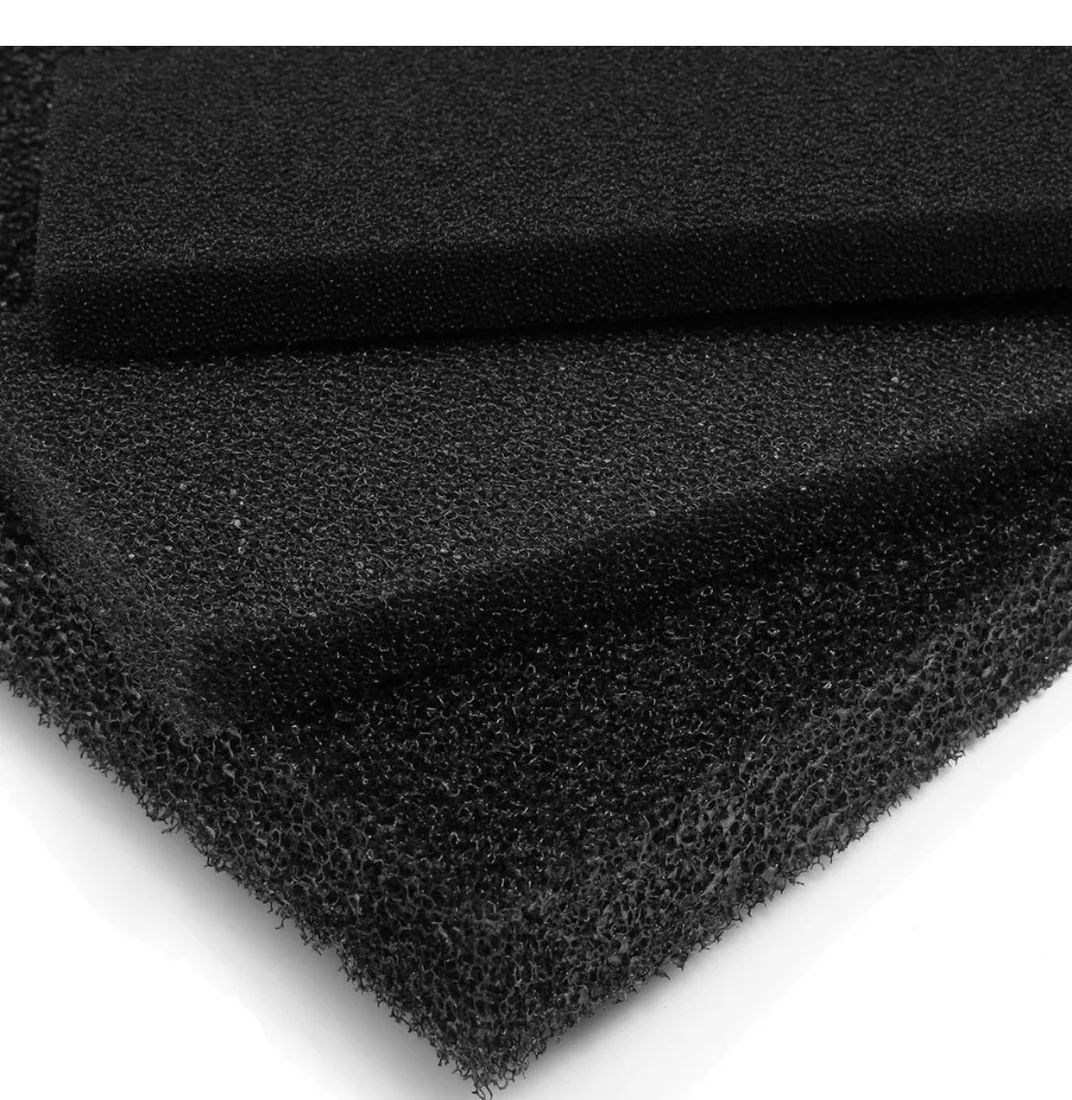
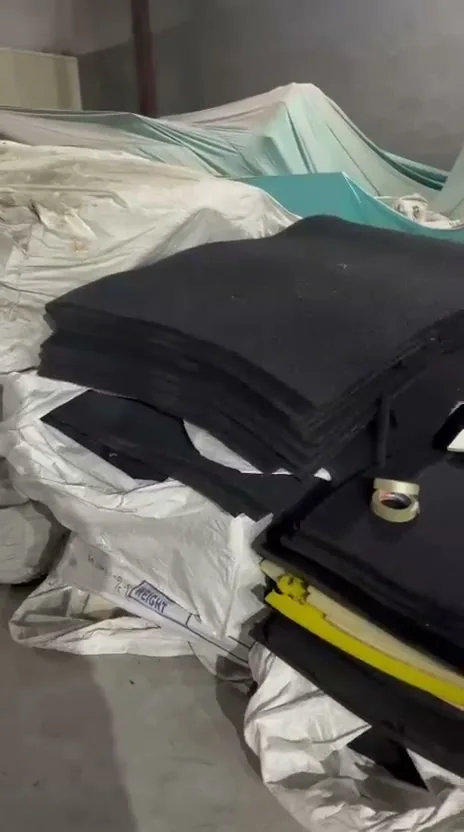
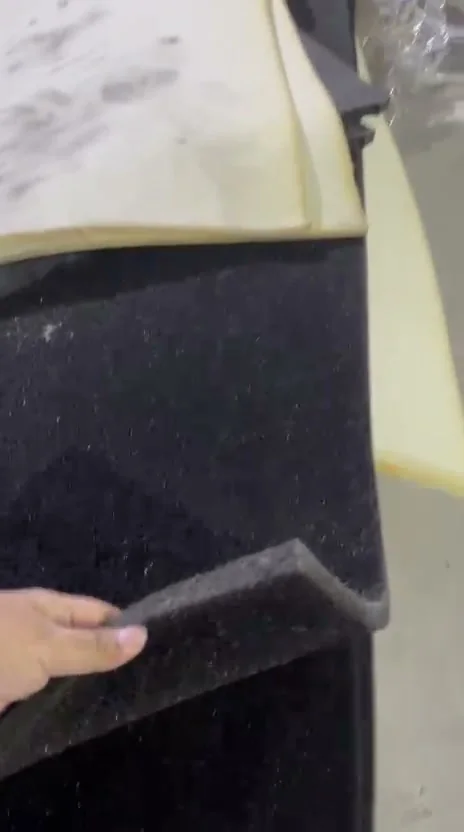
Working with sheet.
Plenty of customers buy sheet and convert in-house. Foam cooperates if the tooling is right and fights back if it is not:
- Band knife — the production answer. Clean cuts, straight edges, handles thickness well.
- Hot wire — good for straight cuts and profiles; slightly seals the cut edge.
- Die — the right choice for repeat profiles at any volume. We can also do this for you.
- Sharp blade — workable for one-offs if it is genuinely sharp and used in one pass.
- Scissors or a blunt blade — avoid. They crush and tear the lattice at the edge, leaving a compressed skin that restricts airflow exactly where the part seals.
For repeat profiles it is usually worth having the parts die-cut to your drawing instead — the tooling is a one-time cost and the edge quality is consistent across the run.
Weight or area.
One thing to watch when comparing suppliers: the trade quotes foam both by weight and by area, and the two are not interchangeable. Coarse and fine grades at the same thickness can differ substantially in weight, so a rate per kilogram and a rate per square metre describe genuinely different things. A quote that looks cheaper per kilo can be more expensive per filter.
Tell us the grade, thickness, sheet size and roughly what annual quantity you use, and we will quote in whichever unit you actually buy in — so you can compare like with like rather than doing the conversion yourself and hoping.
Keeping stock serviceable.
Foam stored properly lasts years. Foam stored badly degrades surprisingly fast, and the damage is not always visible until it is in service.
- Out of sunlight. Ultraviolet light is the main enemy — it embrittles polyurethane, and a sheet left near a window will start shedding strands.
- Flat and uncompressed. Stock stored under load takes a set it never fully recovers from, and a filter that has taken a set no longer seals in its frame.
- Indoors and dry. Foam itself tolerates damp, but stored damp it can grow things you do not want in an air path.
- Away from solvents. Some chemicals attack polyurethane directly. Do not store it next to open solvent containers.
Common questions.
What sheet thicknesses do you supply?
From 5 mm upwards, with no fixed upper limit. Thickness is set when the cured block is sliced, so it is a specification you give us rather than a range you choose from a list — 10, 20, 25, 30 and 50 mm are all routine. Very thin sections below 5 mm become fragile in coarse grades and we will steer you away from them.
Can I buy foam sheet in bulk and cut it myself?
Yes. Sheet stock is supplied to converters, filter assemblers and manufacturers who cut in-house, in the grade and thickness you specify. Foam cuts well with a band knife, a hot wire or a die; it cuts badly with scissors and worse with a blunt blade, which crushes the lattice at the edge.
How is foam sheet priced — by weight or by area?
The trade quotes both ways, which makes comparison harder than it should be. Coarse and fine grades at the same thickness can differ substantially in weight, so a price per kilogram and a price per square metre are not interchangeable. Tell us the grade, thickness, sheet size and annual quantity and we will quote in whichever unit you buy in, so you can compare like with like.
How should foam sheet be stored?
Flat, indoors, out of direct sunlight, not compressed under load. UV is the main enemy — prolonged sunlight embrittles polyurethane and it will start shedding strands. Stock kept flat in the dark stays serviceable for years; stock left compressed takes a set that never fully recovers.
Do you supply rolls as well as sheets?
Sheet is the normal form and covers most requirements. For continuous-feed converting, tell us the width and the run length you need and we will confirm what is practical for the grade — coarse foams at thin sections do not roll well.
Keep reading.
Ready to bring
your idea to life?
Whether you're an entrepreneur with a sketch or an established company scaling production, we'll treat your project like it's the only one on the floor.
Let's talk.
Prefer a quick chat? Call us directly, ping us on WhatsApp, or drop an email. We reply within a few hours during business hours.